Tuesday, April 22, 2008

MEET JANE RATU, OF NANUKULOA, RA

SECONDARY school athletes are gearing up for the Coca-Cola Light Games at the National Stadium.
Some have tasted success while others are still working their way to fame.
Jane Ratu has athletics is in her blood. She is the administration officer for the Fiji Amateur Athletics Association.
Born on September 9, 1959, Jane is from Nanukuloa in the province of Ra.
The eldest of six children, her parents were Luke Snow and Asena Bakani.
Her late father was a policeman and her mother is a retired nurse.
Like many others, Jane was brought up by her maternal grandparents. Her recollection of her childhood memories is full of sports and athletics.
"I used to play netball in primary school and it was only when I attended Form Four in Tonga that I concentrated on athletics," Jane said.
"When I was young, I wanted to become an athlete. I had the passion for it and it was something I liked doing.
"I had a fairly simple upbringing. My parents worked hard to provide us with a good life.
"I was brought up by my grandparents at Nausori. I was always interested in sports, especially athletics.
"It was something I wanted to do when I was young. I was so attached to my grandparents that everytime I went home to my parents I would miss them. I would always want to go back to them. I love them very much."
Jane attended Nausori District School before heading to the West to attend Lautoka Muslim Secondary School. Her father was stationed in Lautoka. In 1976, she left for school in Tonga.
"We were Latter-Day Saints and at that time there were no LDS school in Fiji. So children of LDS members were sent to Tonga for secondary school.
"I attended Liahona High School in Nuku'alofa from 1976 to 1979. I did not have a lot of difficulties growing up but I did learn a lot about being independent.
"When I went to boarding school, I got used to it and being raised by my grandparents, I was used to living without my parents. I was taught to live on my own and to be independent.
"My grandparents taught me a lot. I used to take part in sports when I was in primary school, mostly netball."
She used to run in the 100m, hurdles, 200m and relays.
Jane said her ability earned her the respect of her fellow athletes especially when she was always a step ahead of the rest.
"I was in Form Four and used to outrun the rest of the girls.
"It was something I felt good about because I knew I couldn't have accomplished that if I didn't train hard or commit myself.
"My personal coach that time was Mosese Neata, a Tongan and school teacher. There was another trainer who used to help out whenever Mosese was out.
"His name was Clarence Uyema from Japan. At that time, I was one of the best in athletics.
"For me personally, the feeling of knowing that I was able to outrun the Tongan girls was fulfilling, not only because I knew I was good in the sport but also because I was Fijian.
"I still keep in touch with friends from high school and they tell me my picture is still in the school library.
"My friends said that the principal said no one has ever beaten Fijian athletes in the school."
After completing high school, Jane was given the opportunity to further her education in the United States of America.
She took up dental studies and participated in an indoor dental training and her commitment to athletics dropped and it is something she regrets.
Jane returned to Fiji at the end of 1981 and worked at the Western Regional Library for a year and a half before deciding to look after her ailing grandmother.
"I looked after my grandmother until she died.
"It was a sad time in my life. I am now married and my husband is in the army.
"We have four children and they have my athletics genes. I used to be trainer for Sila Central and organise their inter-house competition. I regret not continuing with athletics when I went to the US but glad I was able to share my knowledge of athletics to upcoming runners.
"There is a lot of talent and potential in Fiji especially the athletes preparing for the Coca-Cola Games. The passion for athletics was always in me.
"It is something I live for and I share the passion with my children. I used to officiate at the Games."
In 2003, she was assistant manager to Joe Rodan for athletes to the South Pacific Games in Suva.
She was then asked to work for the association but prefers to be in the field working with athletes and helping them improve and achieve their dreams.
She said not being able to continue with athletics professionally did not stop her from helping others excel in athletics.
Bound by her passion and dedication to the sport, Jane's advice to students participating in the Coca-Cola Games this year is: "Don't let it end after the Coke Games. Continue to persevere in the sport.
"There is no limit to your achievement and nothing is impossible.
"If you want to explore the world, work hard."


Adapted from Fijitimes Online

MEET VASITI MATANAWA,CHEF OF TRIBE WANTED

,
SINCE the Tribe Wanted group started on Vorovoro Island two years ago, Vasiti Matanawa has been the woman behind the preparation of the tasty and delicious food — as the members put it.
Starting off as a volunteer at the group's camp has paid off as Vasiti now earns good money.
"I started off as a volunteer when I came to the island for a holiday with my grandchildren as my daughter's husband is from Vorovoro Village," she said.
"And during that time, my daughter and her in-laws had to go to Labasa for a church gathering and they asked me to come and look after the members of Tribe Wanted and cook their food," Mrs Matanawa said.
Without hesitation, she joined the group and started as their chef.
"I was a volunteer then and cooked for the group starting off with basic Fijian dishes which most of them enjoyed and loved.
"I enjoyed my job so much because I had to tell them what every root crop was and the different kinds of vegetables that I cook for them and amazingly, their favourite vegetable was rourou," Mrs Matanawa said.
She said the visitors who travelled from all parts of the world enjoyed fish miti.
"Almost every time they will ask me to cook fish miti and dalo or cassava and they will finish it because it is their favourite.
"For breakfast, I had to make buns and topoi and babakau and pancake as it was their favourite breakfast meals," Mrs Matanawa said.
Being a retired school teacher, mingling with the young members has not been a difficult task to achieve.
"They are nice people and very easy to get on with and to teach our Fijian culture.
"Iam happy that I have been part of their lives since they arrived on the island," Mrs Matanawa said.
A retired primary school headteacher, Mrs Matanawa has not regretted taking up the post as a volunteer.
"I started off as a volunteer chef and they paid me later.
"I have enjoyed my job since then and I like explaining to them the different kinds of Fijian food.
"I plan to stay here with them for as long as they want me to because I have enjoyed every minute with them," Mrs Matanawa said.
The Tribe Wanted project started in September 2006 after a group of visiting students from England approached villagers to lease part of their island so they could live the rustic life while learning the Fijian culture and language.


Adapted from Fijitimes Online

Sunday, April 20, 2008

MEET BHANMATI GOVIND OF CAINES JANNIF,SUVA

PEOPLE who go to Caines Jannif to have their film developed or picture framed will place their orders with Bhanmati Govind.
They will think she is just a customer service staff while many know her as the woman with the nice personality at the popular photoshop on Victoria Parade.
But, Bhan, as she is known to her colleagues, is more than that. She has been working at Caines for 48 years and is the company's longest serving employee.
Born and bred in Flagstaff, Suva, Bhan has lived a life of struggle and knows how it feels to bear the fruits of one's labour.
Her parents, Latchman and Etwari Singh struggled to provide them a decent upbringing.
Growing up in Flagstaff was tough. Her father was a waiter at the Grand Pacific Hotel but her mother was a housewife.
Third in the family, Bhan never thought of what she wanted to be.
In fact, she took life a step at a time. Coming from a big family, Bhan always wanted to help the family. She was lucky to go to school on her father's small income.
"I have four sisters and a brother. Life was hard for us because my father was the only breadwinner but our parents made sure we had a roof over our heads and food on the table. Back then, things were cheap and my parents were able to support us.
"We helped each other a lot with whatever difficulties we faced. I never thought I would be working here at Caines Jannif."
Bhan went to Vatuwaqa Government Girls School, now Vatuwaqa Primary School, up to Class Eight but had to leave school to look for work.
She was only 13 when she started work and under the guidance of the late Ben Jannif, she learnt more than what she expected.
"I never found another job. I started working in sales and enjoyed it.
"I was taught a lot of things like how to be a cashier and how to work with clients and customers. It was something I never thought I would do but I am glad I was given the opportunity.
"In those days, Indian women were not allowed to work. They were responsible for looking after the family and do the work in the house but it did not apply to me because I wanted to help my family and I always thank Mr Jannif for giving me the opportunity to broaden my horizon."
Bhan's normal working day starts with taking orders from customers who want their pictures framed.
Working in sales helped her improve her personal and professional life. She became a more confident and persevering mother, wife and sales representative.
"I have made a lot of friends and am fortunate I have been working here for more than 40 years. I am married to Bal Govind and we live in Nasinu.
"I have two sons and we live a good life. I am glad my sons don't have to go through the hardship I went through when I was young.
"I don't regret finding employment at a young age but at that time I couldn't help it.
"If I had to give an advice, I would say education is very important in life."


Adapted from Fijitimes Online
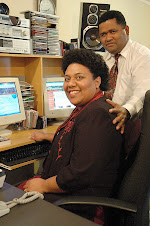
MEET AKUILA REWATABUA OF RUKURUKU, OVALAU, LOMAIVITI

IMAGINE closing your eyes for an hour while doing your work. It is not that easy but for the past 43 years, Akuila Rewatabua has lived a life where the sense of sight is not a privilege.
Born in 1963, Akuila has been blind since birth. Originally from Rukuruku Village on Ovalau, his parents were subsistence farmers. His parents are Petero and Lavenia Rewatabua. He is also the first cousin of rugby star Marika Vunibaka.
Being an only child and only blind boy in the village, Akuila found life hard at first especially having to depend on others around him to get through life. However, Akuila has always felt he would have to live his own life in the future. The interesting thing about Akuila is that his blindness is something he draws strength from and he strives to continue to excel in life no matter the obstacles he faces.
"I'm quite fortunate though, being an only child, my parents were never embarrassed about me. They were not frightened or ashamed to expose my disability. Instead, they tried to give me a normal upbringing like any other able bodied person.
"Not being able to see is different. There were times when I felt insecure about doing things and I had to depend on others to help me get through the day. It was hard at first but I realised that with confidence I am able to live my own life and achieve whatever I want."
Akuila said not being able to see did not stop him from wanting to achieve his dream of being a teacher. He started Class One at the Fiji School for the Blind when he was nine years old. He said Frank Hilton who founded Hilton Special School, went to Ovalau for a visit to identify children with disabilities. He was brought to Suva and stayed at the Tamavua Rehabilitation Unit.
"The first time I entered the classroom, I heard the superior voice of the teacher. I knew then I wanted to be a teacher. When I first came from the island, I didn't know how to speak the Bauan dialect. I didn't know how to speak English well.
"Going to school with other children was all new for me and I felt like I was in a different world altogether.
"I stayed at the Tamavua rehabilitation unit for two years until the Society for the Blind rented a house. I remember the head teacher at the time was Mr Khalil.
"When we were at school, we were not exposed to mainstream education. We were sort of isolated. I continued with the school curriculum and eventually I managed to complete up to Form Four level. I didn't want to waste time. I wanted to move on and face life."
His life was always full of challenges. Akuila said listening to his classmates speak in English and Hindi made him want to learn more about the world and people around him. He completed Form Four in 1978 and joined the Peace Corps as an interpreter for an evaluation project on old people. A multi-talented individual, Akuila was able to interpret Hindi and Fijian into English.
"The experience was an eye-opener and there were a lot of challenges but I took each challenge as it came and carried on with life despite being blind. I then worked as a switchboard operator for Stinson Pearce Limited from 1982 to 1985. I enjoyed what I did and learnt a lot there.
"I was then given the opportunity to further my education at the University of the South Pacific. I studied for a Bachelor of Arts in Literature and Language. The owner of Stinson Pearce Limited, Peter Stinson, sponsored me. I have three more units until I graduate."
In 1988, Akuila achieved his dream of becoming a teacher. He defied all odds and taught Fijian and music at Naitasiri Secondary School. He then moved to Saint Thomas and Sigatoka Methodist.
He said being a teacher was difficult at first. It took time for the students to regard him as one of the able bodied teachers and he felt happy and glad that despite being blind he was able to achieve his goal. In 2003, he was in charge of fundraising for the United Blind Persons of Fiji where he later became the project officer three weeks ago. He is now the president for the Fiji Disabled People's Association.
"Life begins with you and ends with you. How you want your life to turn out depends on you. Having a disability is not the end of the world and it is not something to be ashamed of.
"Being blind made me grow into a more confident and responsible person. I earned the respect of many people and even in my village, they treat me as someone who has achieved a lot and I am proud of the things I accomplished in life," he said.

ADAPTED FROM FIJITIMES ONLINE

MEET ANARE JALE OF ONO-I-LAU

The road to success was never easy for Anare Jale. Fishing, farming and collecting coconuts on the island of Ono-i-Lau were the push factors that made him even more determined to make something better of his life.
Not only did he survive village life, he was blessed to excel academically despite the hardships his family faced.
As far as he can remember, his father was always proud of him when it came to his education.
In 1956, he attended Onolevu District School. Naturally intelligent, where Anare was always placed first or second in class.
"In Ono-i-Lau, there are four villages and the primary school was located in our village. During that time, school children from the other villages on the other outer islands had to travel to school by boat," he said.
"At times their boats would get caught in the bad weather. It was very dangerous so another school was built in another village.
"The struggles I faced in life made me want to be successful. I was determined to be successful. I always excelled at school right from primary school. It was either I came first or second in class. Whatever my position, my father was always proud"
In his final year at primary school, his class performed a drama.
He said they were all given roles to play and coincidentally his teacher picked him to be the turaga ni koro.
It was this special title in the drama that made him want to help develop his village. He said despite having that pretend title, he somewhat felt it was his responsibility to help his people and the village.
He then moved to Viti Levu for the first time to attend Ratu Kadavulevu School as a boarder.
Like all boarding schools, life is never easy. Luckily for Anare, his nurtured survival skills from the village came in handy. However, when he started school at RKS, he was only able to speak Ono.
"I spoke fluent Ono and I was given the name 'vakavanua'. The things my father taught me back in the village got me through boarding school.
"Life was tough though especially in an all-boys school. The older big boys used to bully a lot. My father taught me to stand up and fight. So that's what I did. I fought and stood up for those who were bullied at school.
"One thing I dislike is seeing people being mistreated. So at school, I used to be the protector because I used to stand and fight the bullies.
"On a particular occasion, I almost lost the opportunity to succeed when I wanted to run away from school after a severe beating from a teacher."
He and his best friend, who was his best man at his wedding to Emele Duituturaga last week, were fooling around without realising their teacher was watching them.
His teacher then got a four-by-two piece of wood lying near the school's wooden boiler and used it to as a discipline tool.
"After that beating, I couldn't walk. Early in the morning, I was in pain and I decided to run away from school. I thought to myself that if my parents did not do this to me, then I might as well go home to them.
"I was in Form Four at the time. I started planning what to do. That night I slept with my shirt and khaki shorts.
"At three o' clock in the morning, I left school with a cane knife. The roads that time were very bad and I had to walk from there to Korovou. It was still dark that morning.
"I saw the Lodoni bus and I knew the trend with paying bus fare. People trusted each other and some would enter the bus and pay when they got off.
"So I walked in the bus trying very hard to pretend to have money to go to Suva.
"When I reached Nausori, I got off and hid in the washroom. I then walked to Tovata, in Laqere, where my father was."
Surprised to see him, his father knew instantly something was wrong.
After massaging his back to ease the pain, his father then encouraged him to go back to school.
His other option was to go back to the village and cut copra. He weighed his options and decided to give his education another go.
Completing Form Three to Five at RKS, he then moved on to complete Form Six at Suva Grammar School. "Apart from my academic performance, I excelled at sports especially rugby. I was a member of the Fiji Secondary Schools rugby team in 1969. We played in Tonga and I was a winger," he said.
He went on to graduate from Victoria University, in Wellington, New Zealand with a Diploma in Industrial Relations. He obtained a Certificate in Industrial Relations and Manpower Panning from the External Division of Oxford University in the United Kingdom.
Since then, he has slowly climbed up the ladder to success, starting as a labour inspector with the Ministry of Labour in 1970 and in 1991, he was promoted to chief labour officer where he was ultimately second in charge of the ministry.
He was responsible for the day to day operations of the ministry.
Anare was responsible for providing technical advice to the Permanent Secretary and the minister on issues relating to labour laws, trade disputes, trade unions and International Labour Organisation conventions and articles.
He held that rank until 1995.
"I was appointed Registrar of Trade Unions, he said.
"I was responsible for the administration of the Trade Union Act and Industrial Association Act.
"I was instrumental in the drafting and enactment of the Health and Safety Act. From 1995 to 1996, I was then the deputy secretary for regional development.
"I was responsible to the Permanent Secretary for the day to day operation of the ministry.
"Divisional commissioners reported on the operations of the divisional offices.
"There were times when I would preside over monthly meetings held with senior ministry officials and divisional commissioners."
His thesis for his Diploma in Industrial Relations from Victoria University titled Third Party Interventions in Trade Disputes in Fiji formed the basis of the Trade Disputes Act.
In 1997, he moved up a notch to become Permanent Secretary for Labour and Industrial Relations.
During that time, he was Fiji's director for the Asian Productivity Organisation responsible for the promotion and productivity in the Pacific and Asian countries.
"From 1999 to November 2000, I was the Secretary for the Public Service.
"I was the secretary for the commission.
"That meant I was responsible for all staff matters for the department.
"Being the chief accounting officer as well, I was responsible to the Ministry of Finance on the department's budget.
"In November 2001 to February 2004, I was appointed Fiji's ambassador to the United States of America and Mexico.
"I represented Fiji in meetings with other countries in the world to discuss diplomatic relationship, bilateral and multilateral relationships as well.
"I was even fortunate to meet one of the most powerful men in the world, the President of the US George Bush.
"He is a very polite and lovely person. My brief encounter with him was when I presented credentials. "He is very gentle and very down to earth."
He played an important role in the reintroduction of the US Peace Corps in Fiji after its withdrawal.
As ambassador, he was expected to explore trade and tourism opportunities for Fiji, including meeting with interested investors.
He even organised the first-ever joint Fiji Day celebration for Fiji nationals living in the US and Hawaii.
In 2004, he was chairman of the Fiji National Provident Fund and was responsible for implementing investment and risk policies.
Under his chairmanship, a community service fund donating funds and providing help to charity organisations was set up.
From March 2004 to January 2007, he was chief executive officer of the Public Service Commission.
Now retired, he has continued his involvement in community work.
He is advisor to the Ono-i-Lau Tikina Women's Group, director of Yatulau Company Limited as well as chairman of the Ono-i-Lau Development Committee.
"I feel I have an obligation to my people.
"I was born on the island and I have experienced the kind of hardship the people face.
"I want to help get them out of poverty and this is something I like doing.
"I have never regretted anything in life.
"I work with women's group because women play a vitally important role in development.
"They are the best managers. So far we have installed a solar pump and a saw mill," said Mr Jale.
Development plans are under way to rejuvenate the sandalwood industry, with marketing potential on the islands in Ono.


10 Things about Anare Jale:

Loves soup;
- favourite drink is bu;
- likes gardening and cricket;
- an ardent reader;
- a prompt person — strict on timing;
- a man of few words, prefers to work than talk;
- Lkes soothing island music, dislikes English songs;
- used to be a preacher;
- former member of the Fiji Medical School;
- former chairman and member of Fiji National Training Council (TPAF)


Adapted from Fijitimes Online 20/04/2008

Wednesday, April 16, 2008

MEET SEREANA COKANASIGA OF NADURI, MACUATA

Working with communities is something Sereana Cokanasiga has a heart for. She is originally from Naduri Village in Macuata province. Sereana is also the Program Support Manager for the Foundation of the People of the South Pacific.
Her late parents were Ratu Emosi and Adi Mele Vuakatagane. Born in Suva, Sereana grew up with her maternal grandparents in Lomaloma, Lau, until she was five years old. Her father was an administrator while her mother worked for Home Finance in the late 1960s.
Like most Pacific Islanders, Sereana grew up in an extended family. Third in a family of five children, she was always passionate about helping different communities especially her own Macuata community.
For Sereana, growing up was a mix of urban and rural life. Experiencing all the hustle and bustle of city life, her family owned a poultry farm in Waila.
"I grew up with my maternal grandparents until I was five-years-old and came to Suva after that to start primary school. I grew up in an extended family and my father was an administrator. He was into community development. He was responsible for the construction of the Macuata House during his time as chairman of the Macuata Provincial Council.
"I think I have continued part of what he has started and that is helping in community development especially for our province. My parents bought a poultry farm in Waila and we lived there. Life was fairly simple for us and the one thing my parents made sure of was that we never starved. They always worked at providing us with the best possible upbringing"
She attended Nabua Fijian Primary School and completed her primary education at Suva Primary school. She then went on to continue her secondary education at Suva Grammar School. She said her childhood memories of life on the poultry farm were unforgettable. She used to help out with the collection of eggs to sell at the market. This was something she was never embarrassed about.
"I remember when we used to sell eggs at the market just to earn a little more extra cash. I remember collecting eggs, grading them and then delivering them to different supermarkets or shops. I did not mind. This was something I did with my other siblings when we were younger and this helped a lot with our family.
"After secondary school, I went straight into the work field. I started working for different companies. I was employed as a receptionist and I worked hard at whatever I did. I was later involved in different company projects and administration."
In between working life, Sereana decided to further her studies. Despite the pressure from work and school, she graduated from Central Queensland University in 2000 with an MBA in Human Resource Management. From 1995 to 2006, she was employed as the Human Resources and Administration Manager for World Wildlife Fund. She joined the FSPI in 2006 and has never looked back. She said her role has been challenging but with determination, commitment and dedication she has overcome all obstacles.
"My role as program support manager is very challenging. I am responsible for development management and monitoring of structures, policies and protocols that help FSPI work efficiently and effectively. Basically, our regional non-government organisation focuses on community development where we try to foster self-reliance and sustainable community development.
"The passion for working with communities was already there. However, working with NGOs somehow reaffirmed the need to work in communities although I do more support and administration work. Working with communities is very fulfilling and satisfying. I feel very happy and proud do be able to contribute to the development of my own community and other communities that I have worked with through FSPI."
Sereana said she wanted to be an administrator when she was younger. Although she did not initially plan to follow in her father's footsteps, the thought alone of knowing she contributed to something positive has made her proud of the work her father did. She is married to Filipe Cokanasiga from Deuba and has three children.
Apart from her administrative and management position, Sereana is also part of the Macuata Soqosoqo ni Marama. She said her volunteer work with the women's group has been rewarding. Despite juggling her time with family, work and volunteer commitments, Sereana said the secret to her success is hard work and a good education. "Education is very important," she says.


Adapted from Fijitimes Online

Monday, April 14, 2008

MEET ABBY HVITFELT OF YORK, PENNSYLVANIA

Many people would not remember an article on Abby Hvitfelt three years ago. The 89-year-old from York, Pennsylvania in the United States of America has been in Fiji for over 22 years. During that time she spent 20 years stuffing toy animals and dolls for children at the Colonial War Memorial Hospital's Children's Ward.
Her passion for putting smiles on the faces of tiny tots is somewhat inspirational.
She has been a role model for many volunteers in the country because she has spent endless days and nights shaping the animals and dolls, sewing, stuffing and finally adding colour and facial expressions to the toys.
All this for the sake of a child's happiness.
Her story about her journey to Fiji is quite pleasant and enjoyable.
Listening to her reminisce about how she got the idea to make stuffed toys for children at CWM makes one appreciate the value and contribution of volunteers in Fiji.
Her commitment and volunteer work was recognised in 1995 when she received the Order of Fiji for Service to the Community.
Abby as she is commonly called was born on March 12, 1919.
The youngest of three girls, her father was an electrician while her mother was a trade presbyterian deaconess.
From an early age, Abby wanted to be an explorer.
She wanted to explore Africa but when she found out her classmate had wanted to do the same thing, she discarded the idea almost instantly.
"I knew there simply was not enough room in Africa for the both of us. I didn't want to be a teacher so I opted for nursing. It was sort of my love affair with nursing.
"Growing up was middle-class. We lived through the depression and basically I had a very nice and happy upbringing.
"I never thought I would come to Fiji. In fact, the only time I ever heard about Fiji was when my mother used to say to us in the morning 'Your hair is like the bush in Fiji'.
"The school I attended was right across the street. It was McKinley Primary School and we had only grades
"One to Six. I later went on to attend Hannah Penn Junior High School and right opposite that I attended William Penn Senior High School.
"However, I lost my father when I was 16 years old."
After graduating from high school, Abby was not able to attend nursing school because she was not 18 years old. She was told that she was not 'emotionally mature' to enter. She then decided to do something while waiting to turn 18.
She worked as a cost accountant at an auto supply store where she worked a total of 48 hours a week.
Her second day job was dishing out ice-cream. Although exhausted at the end of the day, Abby did not mind.
"I then attended Union Memorial Hospital School of Nursing in Baltimore, Maryland for three years.
"I kept telling myself 'you're here to serve'. I have never regretted becoming a nurse. The fact that someone needed you and you're able to help is very fulfilling and definitely satisfying.
"In 1940, I married Richard Fogle.
"He was a navy officer and a year after we married he was sent to Honolulu, Hawaii where he served there until the war was over.
"I had wanted to join the service but they did not take married women. I was frustrated.
"In 1942, my son Richard Romany Fogle was born.
"Afterwards, I continued with nursing but life then was very difficult and I had to hire someone to sleep in my flat to look after my son while I was at work.
"You do these things if you have to. Later, when my son was 10 years old, I divorced my husband and remarried Axel Hvifelt.
"He was a professor in Economics."
Having four children later on, Abby then stayed home for almost five years playing mother and wife.
But knowing Abby, she was always doing something if not with a church group, she would be with friends decorating or making all sorts of craftswork.
She then worked part-time and continued to pursue her education.
At the age of 53, she graduated with her Bachelor of Science degree from SUNY Delhi in New York (State University of New York). She then taught nursing at the university for 11 years.
"Teaching scared me to death.
"I got my Masters when I was 65-years-old and I retired when I was 66. I needed to make a clean slate. My husband had gone back to Finland and our marriage was on the rocks so I divorced him and joined the Peace Corps.
"They sent me here and I had never been to Fiji, let alone left my country. I knew this was a whole new adventure for me and I was excited about coming here.
"On July 1, 1986, I arrived in Fiji as a Peace Corps volunteer.
"I served as Sister Tutor at the Fiji School of Nursing teaching medical, surgical and pediatric nursing. My term expired on October 1, 1988, but I was asked to stay on by the US Embassy.
"I used to visit children at the CWM Children's Ward and it was distressing for me to find that none of the children had toys.
"Some of the children are scared to death about being in hospitals so I thought if they had something they could hug then maybe they would feel a bit better."
Since then, Abby has been making stuffed toys with the help of friends and volunteers from Japan International Cooperation Agency.
The mother of five has made almost 24,000 stuffed toys and each toy is given to every child at the hospital.
Leaving in nine days time because of her health, Abby said she will always have a special place in her heart for Fiji and especially the children she's met at the hospital.
The secret to her living long is staying happy.

THANK YOU ABBY FOR ALL YOU HAVE DONE FOR FIJI. BON BOYAGE! FAREWELL!


Adapted from Fijitimes Online