Sunday, April 6, 2008

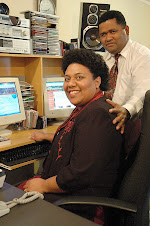
MEET GAVIDI TURUVA, OF TAVUKI, KADAVU

FOR Gavidi Turuva, giving children from broken homes another chance at life is a satisfaction she gets to go home with everyday.
In her view, all children are unique and precious gifts.
She feels today's community is missing out on many issues concerning children.
"We are missing out a lot on children's issues which we think is very small especially in the community," she said.
"It's every parent's duty to take care of their children."
The 50-year-old counsellor said sharing her experiences with children who come from such backgrounds "helps both sides find solutions that will work in the child's favour".
She started doing counselling by helping out in the community as a young girl growing up in Ba.
"I started in this career path because I love working with children," she said.
"I was brought up in a very big family. My interest in working with children goes back to when I was in school at Saint Theresa's, which at that time was run by the nuns in Ba. After completing primary education I went on to Xavier College before trying to find my footing in my career path.
"What really made me more determined to look after and care for these children is that I had been adopted myself. I am able to share my views and experiences with these children."
Gavidi hails from Tavuki, Kadavu, and has been married since 1979. She has three grown children whom she is very proud.
"I have been doing community work with the Soqosoqo Vakamarama for the past 10 years," she said.
She said the National Council of Women opened a counselling office but the military takeover of December 5, 2006, closed it.
In stepped the Soqosoqo Vakamarama Saunaka branch, which took over with the blessings of the Taukei Naua, Ratu Ponijese Lou.
"When I joined the National Council for Women, I underwent courses with the Fiji Nursing Association and with our counterparts from Australia known as Child-Wise from Victoria State in Australia.
"The course was from 2001 to 2005. The workshop focused on health issues and was one way we are trained to find out how we can combat crime, sexual abuse, HIV/AIDS and marriage breakdowns."
Gavidi said parents had to do their homework from the very beginning. She said it was an enormous task to educate children on what married life would be like and that she found the biggest abuse in the community was neglect.
"For many, it's as long as you can see a child walking we send them to the shop on errands.
"I believe if we all do our homework and pay more attention to our children, we will be crime-free, no diseases."


Adapted from Fijitimes Online

MEET ULAMILA BULAMAIBAU OF VANUASO, GAU, LOMAIVITI

ULAMILA Bulamaibau believes success is all about taking the risk and wanting to experience life.
The former manager training for the Fiji Development Bank is the executive director of the Society for the Prevention of Cruelty to Animals.
Originally from Vanuaso on Gau, Ulamila joined SPCA this year. Her late father Ratu Kulanikoro Qicatabua Bulamaibau was a civil servant.
She said her mother Sesarina Elina did the most important work of being a wonderful mum. Born in Suva, Ulamila went to primary school in Suva but went to secondary school in Lautoka.
Being an only child, she learnt to be independent especially having to keep busy with favourite pastimes. She said apart from normal everyday life, she was able to withstand hardship.
"The only child in the house meant having to occupy oneself or amuse oneself with pastimes that one could do independent of anyone else.
"These included activities such as reading, drawing, colouring, climbing trees in the yard and collecting stamps. There were moments with the neighbours children.
"It made me accept challenges as they come. I was taught to work hard, not to waste and also to appreciate what I am given.
"My father was a disciplinarian. When I was young, I wanted to be a number of things.
"This kept changing and now when I look back, I think it is really funny because I have obviously gone far away from those initial thoughts.
"Sometimes it has to do with the glamour of the job, pressure from family or the way society sees a type of job that influences the way young people think about what they should or should not do. But I never thought I would be where I am today."
She went to Gospel Primary School for less than a year before finishing off at Jasper Williams in 1981. She got her secondary education at Jasper Williams High School and on to the University of the South Pacific where she obtained her Bachelors degree. In 1990 she joined the FDB as a research officer and worked her up to be a top staff before her move to SPCA.
A thought on many people's mind is why the move from a well-paid job at FDB to join the animal care field.
"When the position became vacant I thought about it but not that seriously. On the other hand, I had also been seriously thinking about what I was doing and whether it continued to excite me or challenge me in an interesting way.
"I started to think of whether I could do something that was really meaningful to me and was real, something that would make an impact. I knew that it was time to move out of my comfort zone and make use of my experience.
"I wanted to learn and work in the field of animal welfare. All the while, I had the backing and encouragement of a close friend who believed I should take up the challenge.
"That encouragement and support helped me in making the final decision."
She said the interest in animals was always there. Ulamila said they had pet dogs who were her reliable friends.
"I like having them around. They were always there. Even now, I always feel that pets are always there, they are tough and they never give up on you, even when they are sick.
"They are always there to welcome you and follow you to the shop if they can. Some of the benefits of the job are working with animals who are God's creation, helping make a difference for animals though SPCA efforts and meeting people who share or contribute to the efforts of animal welfare.
"For me, it is comforting to know that one is not alone in the battle against cruelty to animals. The Creator is the biggest inspiration in my life because he works in mysterious ways and there are things that after it has happened I wonder, well how could that be possible?
"It makes the struggle worth the effort especially in the field of animal welfare, when one knows there is someone out there looking out for you."
Ulamila said there were a lot of opportunities for those wanting to join SPCA. Her advice to students is weigh the possibility of studying veterinary science.
She said this was particularly useful in a country such as Fiji where there are only a few veterinarians. She said SPCA needed people who share in its vision and goals and most important, those who are passionate about animal welfare in Fiji and can do something about it.
"In life, there are regrets and there are times when one tastes success. It is all about taking risks and wanting to experience life by taking and giving back something to this world and life.
"Joining SPCA, for me, was all about that," said the optimistic director.


Adapted from Fijitimes Online

MEET REPEKA VERETI FROM TUBOU, LAKEBA, LAU

AS a young girl growing up in the village, Repeka Vereti dreamt of making a name for herself in the world of business when she grew up.
She was born and grew up in Tubou, Lakeba, in Lau, where her father comes from. Repeka has two brothers and four sisters.
Her father died when she was in Form Three and her mother still lives in the village.
Repeka attended Ratu Finau Primary School before entering Ratu Mara College.
The idea to become a business woman came from her father, she says. He was a businessman and had a village store in Tubou.
Repeka said she would spend most of her time helping her father run the family business.
When I was in secondary school, from Form 4 to Form 6, every time we had school break, I would go home and help out in our store after my father died and thats how the idea of becoming a businesswoman came up, she said.
When I finished Form 6 on the island, I decided to complete my education in Suva. I managed to get sponsorship for my school fees at Ballentine Memorial School.
She said she faced difficulties and struggled when she didnt have the support of relatives.
While doing my computer studies in 1993, I applied to work during my school break at the Marine Headquarters. When I completed computer studies, I still couldnt find a job and I knew I couldnt rely on my relatives.
It was the turning point for me . I made up my mind that I would stand up for myself and start a business on my own which was the dream I always had as a child.
Out of all the struggle and difficulties she went through, Repeka was able to overcome them and set her foot towards making her dreams come true.
Repeka now runs her own business at the Flea Market in Suva.
She sells Fijian artifacts like Fijian tapa, woven baskets, special garlands (sisi ni Lakeba), mats, Fijian fans and she also does flower arrangements and sews pillow cases.
When you have the heart and the desire to learn more, youll be able to discover new things as you go along, she says.
Before I didnt know how to weave a mat and to do some of the stuff I now sell, but it always interested me and I was willing to learn new things.
Now married with two children, she says, she now has the support of her husband which motivates her to make her business a success.
Im so fortunate to have a lovely husband who supports me in every decision I make. He is always there for me whenever I need him.
On good selling days, she can earn about $700 to $800 a day, which helps her family and her business.
Repeka believes in treating her customers well.
You will only achieve things if you have the heart and the desire that will motivate you to achieve such things, she says.
I always have faith in my business and I make sure that I provide a good service to my customers and I try to satisfy their needs. I believe when you treat them nicely, theyll enjoy your service for the day and maybe return.
My advice to people thinking of starting their own business, is always have a good heart with a smiling face. Dress up properly and present yourself nicely to customers.


Adapted fromFijitimes Online

Friday, March 28, 2008

MEET ELIESA IRAVA OF LOSA, ITU'TI'U, ROTUMA

ANY talk of power-lifting automatically draws out a picture of a muscular man. Although Eliesa Irava may seem like that man, his road to becoming one of Fiji's top power-lifting sportsman was not easy.
Despite being the president of the Fiji Power-lifting Association, Eliesa, 42, had a simple upbringing. Born and bred on the island of Rotuma, his parents Kepone and Kijiana Irava were farmers. Originally from Losa, Itu'ti'u, Eliesa always loved sports.
However, the thought of powerlifting was never on his mind. When his father left for Fiji in 1972, Eliesa said his family struggled to survive.
"I was born in Ahau, Rotuma and my parents were simple farmers. We lived a normal village life. My father left for Fiji to find employment. We struggled because our father was not there but we still managed to survive. I came to Suva in 1975 when I was in Class Five. I attended Upu Catholic Mission School in Rotuma then finished my primary education at Samabula Government Boys school (now Suva Primary school). I continued my education at Cathedral Secondary school. I was always interested in sports. But never thought I would eventually take up powerlifting seriously."
After completing secondary school in 1983, he did odd jobs just to help his family. And used to do weightlifting just as a hobby to shape up.
"In secondary school, I tried to be a high jumper but my built and weight did not make that successful. I also took up javelin and realized that I was actually good at it. In 1982 at the Juicy Games (now Coca-Cola Games), I held the record for the Intermediate Boys javelin. That memory and that achievement was one of the greatest because I did not realise that a simple boy from the island could succeed especially in high school.
"I joined Kelton Group in 1988. In 1994, I returned to Fiji from Papua New Guinea and the late Tifere Ravai introduced me to powerlifting. I was inspired by his dedication and commitment to form a powerlifting team for the South Pacific Games in Tahiti. The following year in 1995, I represented Fiji in powerlifting in Tahiti but I did not take it seriously. I just wanted to wear the suit but after the games, I realised I did not win anything and when I looked at all the other lifters who had medals, I wanted to train harder to win like them."
At the Mini SPG in 1997, he won his first gold medal and never looked back.
Eliesa then knew he could win if he set his mind to it. He said the fact that his first gold medal was the last gold medal for Fiji at the mini SPG, was something that has always pushed him to excel further in the sport.
"I have continued to improve my form at every game or competition. In 1998, I won a silver medal at the Oceania Games in Napier, New Zealand and the following year at the South Pacific Challenge and Australia Open powerlifting competition, I won the best overall trophy. It was this placing that I qualified for the World Open Bench Press in 1999 in Finland. Even though I was placed 12th at this competition, the mere fact that I reached a competition where I faced the world's best is amazing," he said.
"The sport has taken me to places I never thought I would go. For most islanders, our physical structure makes us good for sports like this.
"One of the best memories that I have is participating in the 2003 SPG in Fiji. I participated in front of my family and was ecstatic and proud to perform in front of them despite the competition being so intense.
"Winning a gold medal in the 100kg category in front of my family and the home crowd was another bonus."
The father of four said family support was his strength.
He draws inspiration from his father and believes that anyone with the right built and mind can succeed in the sport.
His advice to those thinking of making a name for themselves in powerlifting is there is no easy way to it, just work hard and stay committed.

Adapted from Fijitimes Online

Monday, March 24, 2008

MEET JOSATEKI SAVOU OF TOVU, TOTOYA, LAU

The mere mention of his name makes people think rugby sevens rugby to be exact.
While many only know him as the coach of the Digicel-sponsored Fiji sevens team, Josateki Savou has been around long enough to read the game better than most people.
However, as far as his personal life goes, it is a guessing game for all those fanatics who expect him to deliver victory after victory.
The eldest of three children, Josateki was born in April, 1969.
Originally from Tovu, Totoya, in Lau, his father was a prison warden and his mother a nurse.
Born and bred in Suva, Josateki spent most of life growing up in prisons quarters at Korovou, Naboro and Ba.
The surprising thing about this rugby coach is that he played soccer before rugby.
Believe it or not, when his family lived in soccer-crazed Ba, he spent most of his time playing soccer with friends.
He was so good at it he seriously considered taking his soccer skills to a professional level.
He attended Ba Mission Primary School. In 1983 he attended Lelean Memorial School after his family moved back to Suva.
He completed Form Six vocational at Ratu Kadavulevu School.
During his last years in primary school and all through his high school days, Josateki's interest in rugby kicked in.
He has fond memories of growing up with his Fijian and Indian friends, saying he was always surrounded with a sporting atmosphere that prompted him to excel in sports.
"I had a normal upbringing, nothing out of the ordinary. My father is a retired prisons officer and my mother a retired nurse," he said.
"I used to play soccer a lot with my friends in Ba. At one stage of my life I was thinking of becoming a soccer rep because I had picked up some soccer skills while playing the game for fun. However, when I was in Class Eight, I started playing rugby and from then on until secondary school, I continued to play rugby.
"When I went to Lelean, I continued to play rugby and that continued when I attended RKS.
"The rugby atmosphere in high school made me want to achieve in this sport but I have never forgotten that at one stage I wanted to be a soccer rep.
"It was not difficult switching from soccer to rugby.
"It almost came naturally for me but I was always determined to achieve high results in whatever I did whether in sports or in my own personal life."
In 1988, he was selected in the Fiji Secondary Schools Under-19 rugby team that toured Australia.
He said the feeling of being selected into the team was indescribable.
Josateki said after his debut in the U19 team, he was invited to play on contract for a year for the Gold Coast rugby club in Brisbane, Australia, in 1989.
The following year, in 1990, he again played his rugby overseas, this time in Napier, New Zealand.
He returned to Fiji in 1991 after he was called to play for the Prisons Nabua team.
"Playing rugby overseas felt good.
"I was confident that my rugby career was going in the right direction.
"I felt happy and excited going to these places and the experiences and memories are opportunities never forgotten.
"It was my first time overseas and even though I enjoyed my time there, I missed home a lot especially my parents.
"The weather was cold and the environment was new for me but I learned a lot while I was there.
"Being selected in the Under 19 team was a dream come true.
"I had always wanted to don the white jersey and I eventually did.
"One piece of advice I can give people is never give up no matter what the obstacles.
"Always stay focused and work hard to achieve your goals.
"With determination and the right focus, you can succeed in anything," he said.


Adapated from Fijitimes Online

Saturday, March 22, 2008

MEET SARAS KEWAL OK LAKENA, NAUSORI

LIKE most kind people, Saras Kewal, pictured. has a passion for helping out the needy.
The regional president for Soroptimist International, Mrs Kewal was brought up at Lakena Village, Nausori. Not having the privilege to live a luxurious life, they lived a life of struggle.
Her father Ram Khelawan was a farmer and mother, Kalas Pati, a housewife.
Life in the village was quite hard especially when her father was the only breadwinner in the family. She said the financial burden of supporting seven children at school was quite hard for her parents who struggled to make ends meet. Fourth in the family, Mrs Kewal said despite the hardships her family faced, togetherness was what helped them overcome all difficulties.
"I was brought up in the village and my father was a farmer. He did not earn much and because there were seven of us in the family, life was very hard,'' she said.
"I came from a poor family background. We struggled a lot when we were in school but we were always there for each other.
"Whenever my parents went to the farm, I would help my other sisters with the house work and look after our younger brothers. When I was younger, I wanted to be a nurse. I wanted to join the medical field simply because I wanted to help people.
"This is something that has always been in my nature ... to help people especially the poor and needy.
"The medical field always inspired me because the feeling of helping some one in need is just overwhelming."
When her family moved to Viria, she attended Viria Public school and in 1974 she attended DAV Girls College.
Unfortunately, financial difficulties forced her to leave school after Form Six.
She then married Ram Kewal, a dentist from Labasa. She said her husband's occupation was very demanding and they were always on the move.
"My husband was a dentist and he travelled a lot. We went to Savusavu and Taveuni.
"In those places, I helped out at the pre-school. I wanted to keep myself occupied especially when the places we went to were mostly remote areas. I volunteered as a pre-school teacher because I wanted to do something with my life and be useful to others.
"It was unfortunate that I was not able to further my education after high school.
"However, I never lost hope and was determined to continue to excel in my life.
"Currently I work at Morris Hedstrom in Walu Bay as a variety buyer for the company.
"Basically, I do variety buying for the company which means I travel to places like New Zealand, Australia, Malaysia and China and get products like home appliances, kitchenware and linen."
She has been working for the company for 15 years. She said she enjoyed her job and was thankful to her employer for believing in her.
Apart from her day job, Saras has continuously shown interest in helping the community.
Her role at Soroptimist International has prompted her to continue promoting the development and achievement of professional women.
"I learned about Soroptimist International when I was in Labasa in 1990.
"I joined the organisation because I knew it was about helping people. This was something I always longed to do. I joined without second thoughts and never regretted spending my time with this organisation.
"I always had a soft spot for poor people. Whenever I see them, I always think of my own upbringing and how I struggled just like them.
"This is the reason why I want to help the poor.
"Whenever I help others, I get satisfaction and happiness knowing that I played a part in making someone else happy.
"That is the best feeling in life. Even if I didn't turn out to be a nurse, I am happy with the way my life turned out," she said.
Saras believes in hard work and support of her family which she considers the thriving force behind her success.
The mother of two said it is only through hard work that a person can achieve anything or succeed in life. Her advice for those who have travelled down the same path is to never lose hope.
"If you have a goal in life and you don't reach that goal, that does not mean it is the end of the world. There is always another opportunity some-where. You just have to look harder,'' said Mrs Kewal.


ADAPTED FROM FIJITIMES ONLINE

Friday, March 21, 2008

MEET HOWARD POLITINI OF HIGHLANDS SCENIC TOURS

FOR Howard Politini, after completing high school, sailing the high seas was the career path he had set his sights on.
The profession of ship navigator or crew on board large ships was nothing new as he was only following his father's footsteps of being involved in the shipping industry.
"My dad Louise Politini was involved in the shipping industry and it grew on me and I became interested in sailing the big ships," he said.
"The boats that I worked on were known as the bulk carriers."
After finishing school at Ratu Kadavulevu School in Tailevu, he went to the School of Maritime studying a diploma in nautical science majoring in ship navigation.
"I attended Holy Trinity for my primary education and then went on to Suva Grammar before finishing off at RKS," he said.
"I was sailing on container ships between Australia and New Zealand and it came to a point where it was not good for my marriage life.
"So my wife suggested that we try out eco-tours to the highlands as there was a market for it.
"I signed off the ship and totally finished off my sailing career from 2001-2004."
Howard said in getting his partnership business Highlands Scenic Eco-tours started with his wife, Paulini, has been good so far.
"Since getting into this business I have no regrets," he said.
"My wife has been involved in the tourism industry so she had checked around to see what was in demand."
Highland Scenic Eco-tours has been in operation for the last two years.
He said a normal day's tour would involve a trip to the highlands up to the Rewa Bridge visiting villages with tourists.
He said when tours were conducted to villages, tourists were encouraged to visit schools and learn more about the surroundings.
He said guests were touched by the hospitality of villagers.
"Looking at the struggles here as well makes the tourists appreciate what they all have back home."
Many tourists, he said, go back home and try and send books for needy students here.
"We also set up a scholarship trust fund to cater for the needs of students. Most students benefit from this, especially the ones who don't have relatives who work in towns and have good jobs and their parents are solely developed on the land
"The scholarship was initiated last year and is kept within the school. If he had not changed his career, he would have still been sailing the high seas.
"I know people would ask why go out of my way to get things done. But if every man has a heart he would go out of his way to help the needy."
Howard said young people should "seek the Lord with all their hearts and strength in everything they do''.
"And never fail from their calling to help the poor and needy in society."

ADAPTED FROM FIJITIMES ONLINE